


Activated carbon filter clogging your joint? How to avoid clogged and gummed-up activated carbon filters

The key points at a glance:
1. Why does an activated carbon filter in a joint clog or gum up in the first place?
Discover why condensation, resin and design cause activated carbon filters in a joint to clog or gum up – and how to keep the airflow clearer.
Learn more
2. Common mistakes when smoking & rolling with activated carbon filters
Learn which subtle mistakes while rolling increase the draw resistance and clog the filter prematurely – and how to fix them step by step.
Learn more
3. How do you avoid clogged and gummed-up activated carbon filters?
Find out how even small changes and tricks can actively prevent your activated carbon filter in a joint from gumming up or clogging.
Learn more
4. Answers to the most common questions
Answered directly – plus what the law says and which accessories are a good fit.
Learn more
What to do when the activated carbon filter clogs?
An activated carbon filter usually clogs due to drawing too hard, damp or too finely ground material and compressed carbon. Draw slowly and loosely, keep the filter dry and choose quality carbon with a clean closure. If the filter no longer draws at all, replace it – a clogged 6 mm filter can rarely be saved for good.
Many people know the problem: the joint suddenly stops drawing. You've only just started – and after a few pulls the activated carbon filter is blocked, the draw is obstructed and inhaling becomes much harder. The issue: clogged or gummed-up activated carbon filters that interrupt the airflow and noticeably spoil the smoking experience.
But it doesn't have to be that way. In this article you'll learn why activated carbon filters clog at all when smoking cannabis or tobacco, which typical causes are behind it and how to avoid the filter gumming up in future. We'll also show you what to look for when choosing suitable filters and which designs and materials most reliably ensure a constant airflow.
Why does an activated carbon filter in a joint clog or gum up in the first place?
Activated carbon filters can clog or gum up for various reasons when smoking cannabis or tobacco. The problem often arises from condensation inside the filter: while smoking, the smoke cools slightly, causing it to condense and depositing moisture and sticky residue on the pores of the activated carbon. With each further use the air channels narrow, until the filter clogs and the draw is heavily restricted or completely blocked.
Gumming up often occurs together with clogging – especially with very resinous herb. The sticky components settle on the surface of the activated carbon and combine with moisture to form a tough layer that is hard to pass through. As a result, not only can more pollutant particles get caught in the activated carbon filters, but the airflow can also be restricted much more strongly.
Also often underestimated: the material and design of the filter. A grain that is too fine, filling that is too dense or incorrect handling while rolling all make the filter block or turn sticky more quickly. Storage plays a role too: if filters are kept in damp places or used several times, deposits build up that make the problem even worse. Anyone who knows these causes can counteract them specifically and thus prevent the activated carbon filter in a joint from gumming up or barely letting any air through after just a few pulls.
Our product recommendations for a more pleasant smoking experience


Common mistakes when smoking & rolling with activated carbon filters
Some problems with activated carbon filters don't come from the material itself, but from small moments of carelessness during preparation and consumption. A common trigger is the uneven distribution of the material: if too much tobacco or cannabis gathers in one spot, the smoke can't flow through evenly and builds up in front of the filter.
The choice of paper can also play a role. Very thick or coated papers let the smoke through more slowly and thus encourage residue to settle in the filter. Less well known but equally relevant: an improperly inserted filter. If it's placed crooked or too deep in the paper, it changes the airflow and can lead to deposits on one side that make the filter block or turn sticky more quickly.
Finally, timing plays a role too: leaving the joint unsmoked for a longer period risks moisture from the surrounding air drawing into the filter. Combined with the particles already present, this can mean the filter is suddenly heavily blocked on the next pull. Such mistakes are easy to avoid with a bit of routine – and keep the activated carbon filter performing well for longer.
How do you avoid clogged and gummed-up activated carbon filters?
Even though clogging or gumming up can never be ruled out 100 %, there are proven methods to significantly lower the risk. It's important not only to pay attention to handling, but also to deliberately choose quality when picking a filter. With these six steps you'll make sure your activated carbon filter draws freely for as long as possible.

1. Insert the filter only shortly before smoking:
If the filter sits in the paper for a long time while you're building the joint, it can absorb moisture or dust. This affects the pore structure of the activated carbon and makes it more prone to deposits. So insert the filter as late as possible.

2. Tap it out gently before rolling:
Gently tapping the filter frees it of loose activated carbon crumbs or dust that can hinder the airflow. Be careful not to tap too hard so you don't shift the filling.

3. Vary the rolling angle:
Don't always insert the filter in exactly the same way, but slightly offset. This distributes the airflow more evenly and deposits form less concentrated in one spot.

4. Don't use flavoured papers:
Coated adhesive strips can carry particles or sugar residue into the filter when heated. There they form sticky residue that is hard to dissolve.

5. Choose filters with open-pored caps:
Open-pored caps ensure better removal of moisture and prevent condensation from building up in the filter. Models like those from Medusafilters rely on open-pored cellulose-based solutions here that are both functional and sustainable.

6. Store filters dry and protected:
High humidity or temperature fluctuations can stress the activated carbon even before use. So keep filters in a dry, clean place – ideally in the original packaging or a sealed container.
With these targeted adjustments, the likelihood of an activated carbon filter in a joint clogging or gumming up can be significantly reduced. This keeps the airflow constant and the filter's function optimally intact.
What makes a good activated carbon filter so it doesn't clog
Whether an activated carbon filter in a joint draws cleanly or blocks after a short time also depends heavily on its design and choice of materials. Models with open-pored caps prevent moisture and condensation from building up inside. This makes it easier for particles and resins to be carried away without gumming up the pores. The grain of the activated carbon is equally decisive: if it's too fine, the airflow clogs faster; if it's too coarse, the filtering performance drops. An optimally matched structure ensures that pollutants are effectively bound without impairing the draw.
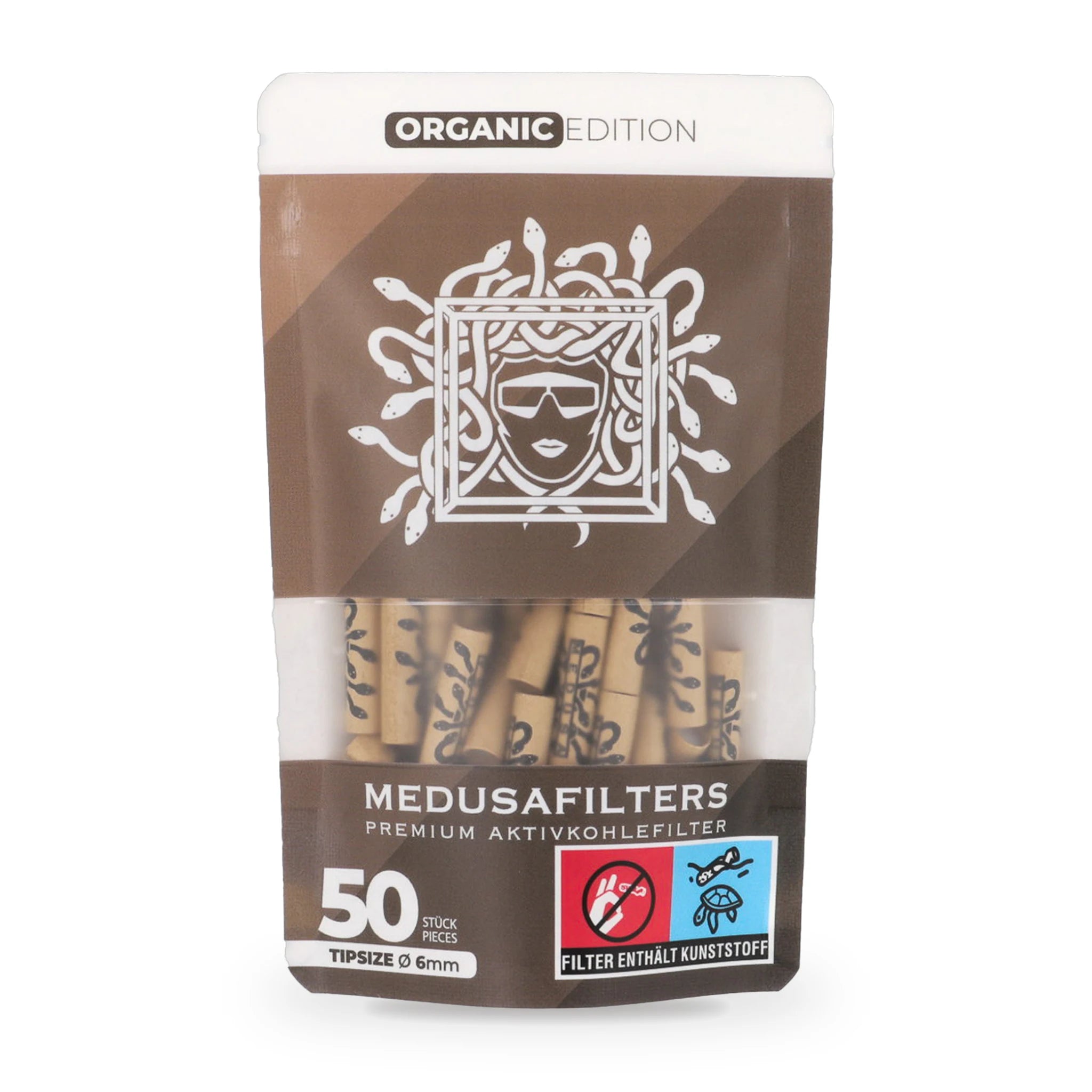
The filters from Medusafilters, for example, put exactly this balance into practice consistently. The combination of fine-pored activated carbon from coconut shells and fully biodegradable cellulose caps clearly reduces the risk of clogging and gumming up. At the same time, the airflow is kept even – from the first to the last pull.
So if you value reliable function, when choosing you should make sure that the filter is optimally matched in both the cap structure and the activated carbon filling. This not only achieves an even airflow, but also minimises the risk of the activated carbon filter gumming up or even becoming unusable after just a few pulls.
The right accessories from Medusafilters

FAQs on clogged or gummed-up activated carbon filters
Even though activated carbon filters bring many benefits when smoking, clogging or gumming up can still occur in certain situations. Here we answer common questions, give extra tips and also shed light on further details that you as a smoker don't always immediately have in mind.
It's usually a combination: drawing too hard, damp or too finely ground material and low-quality carbon that crumbles into dust. Condensation from the smoke also gums up the fine pores over time. If you draw slowly, keep your material dry and don't grind too finely, the filter clogs far less often.
Sometimes yes: gently tap the filter so shifted carbon redistributes, and loosen an end that's rolled too tight. Then draw deliberately slowly. But if the carbon is completely saturated or condensation has drawn into the pores, only a replacement helps. Disposable activated carbon filters can't be cleaned permanently – reusable glass filters, on the other hand, can.
Draw slowly, evenly and without force. Strong, hectic sucking only presses the carbon together more tightly and pulls fine particles deep into the filter. A loose, calm draw keeps the channel clear, cools the smoke better and protects the carbon. Also make sure not to pack the end too tightly so air can flow through unhindered.
The most reliable are dimensionally stable filters with a clean build. The activated carbon filter from Medusafilters with a 6 mm diameter delivers a noticeably cooler, filtered draw and keeps the draw clear as long as you pull dry and loosely. Cheap carbon that falls apart into dust, on the other hand, clogs quickly. Quality in the carbon and end caps makes the biggest difference here.
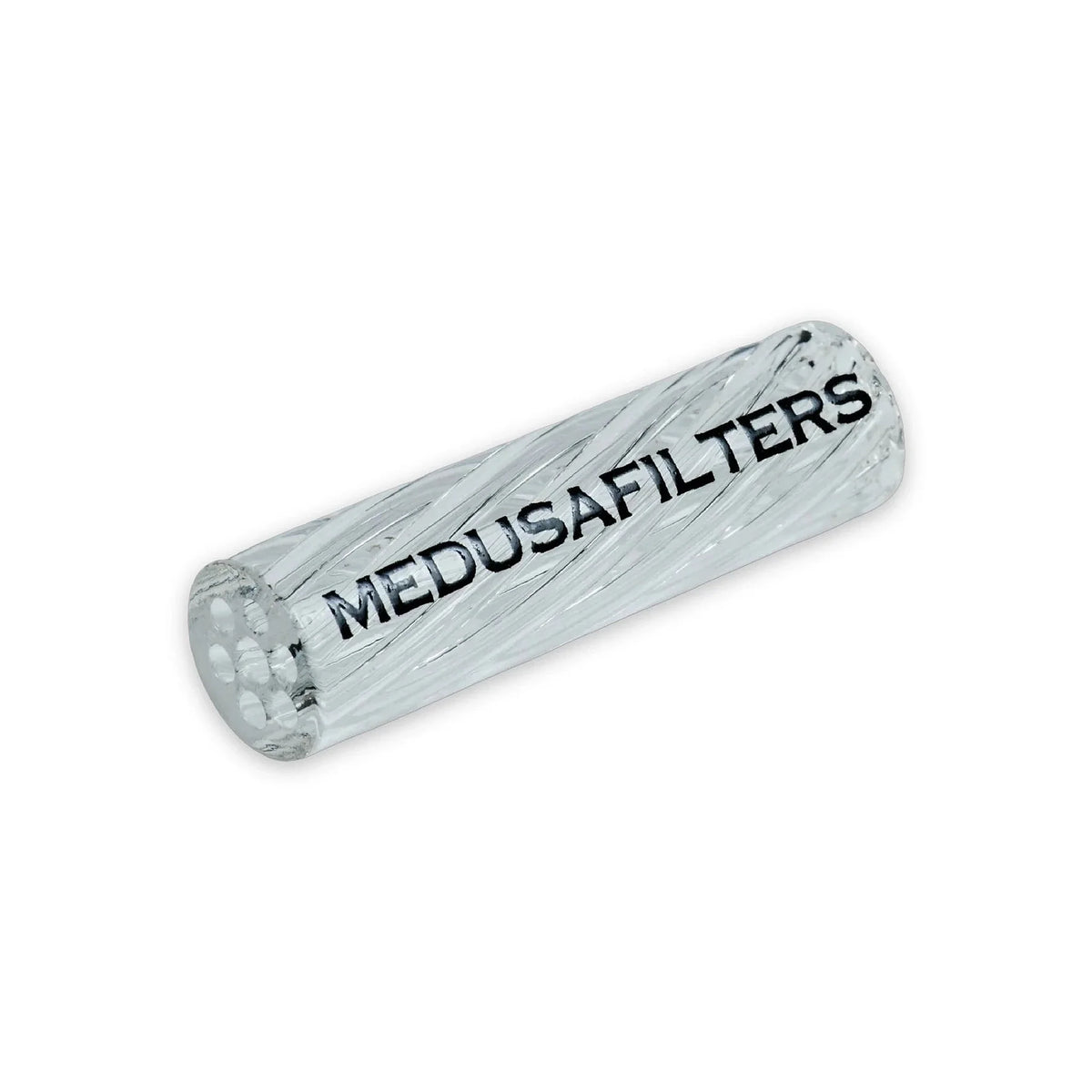
For many, yes. Reusable glass filters have a firm, open channel that can't be squeezed shut, and can be rinsed out and dried after use. As a result, they clog less often than soft disposable filters. The ideal is the combination of an activated carbon filter for the cooler, filtered draw on the go and a glass filter for at home.
A disposable activated carbon filter is meant for a single session and should be changed as soon as it draws worse, becomes damp or the smoke no longer arrives cool. As a rule of thumb: if it still doesn't draw after loosening and drying, the carbon is saturated and a fresh filter is due. That keeps the draw clean and cool.
Maybe also interesting for you?


Our Medusafilters conclusion
Clogged or gummed-up activated carbon filters are not an unavoidable problem – the causes can often be significantly reduced with just small adjustments to handling, material choice and storage. What matters is opting for a design that drains off condensation, keeps the draw resistance constant and efficiently binds pollutants from the smoke.
This is exactly where the filters from Medusafilters score: they combine fine-pored activated carbon from coconut shells with open-pored cellulose caps that don't trap moisture and thus minimise the risk of clogging or gumming up. At the same time they are fully biodegradable and produced in Germany with solar power – a solution that unites functionality and sustainability.
So if you want to consume mindfully while keeping an even airflow right to the last pull, a well-thought-out filter is the best foundation. High-quality models like those from the Medusafilters headshop make a noticeable difference here – both in use and in terms of the environment and quality.
Sources:
Why does an activated carbon filter clog?
Direct answer
An activated carbon filter clogs when residue blocks the fine pores of the carbon or the carbon itself collapses. The most common causes are drawing too hard, damp or too finely ground material and low-quality carbon that crumbles into dust. Condensation from the smoke also settles over time and gums up the draw. With very finely ground herbs, small particles are sucked into the filter and block it from the smoke side. The narrower the channel and the denser the packing, the faster the filter blocks up. A good filter filters pollutants out of the smoke without the draw closing up completely – that only works with dry material and a clean draw technique.
Activated carbon filter won't draw – what to do?
Direct answer
If your activated carbon filter no longer draws, it's almost always down to compacted carbon, moisture or material packed too tightly. Here's how to get the draw back in most cases:
- Draw deliberately slowly and loosely – strong sucking only presses the carbon together more tightly.
- Gently tap the filter so shifted carbon spreads out evenly again.
- Check whether the end is rolled or packed too tightly, and loosen the packing slightly.
- Keep everything dry: moisture makes carbon and herbs swell and blocks the draw.
- If it still won't draw, the carbon is saturated – then only a fresh filter helps.
Avoiding clogging: draw technique, quality, closure
Direct answer
You avoid clogging with three levers: draw technique, quality and closure. With draw technique, the rule is slow and even rather than hectic and hard – this keeps the carbon loose and the smoke cool. With quality, what counts is dimensionally stable activated carbon that doesn't fall apart into dust; cheap carbon crumbles and blocks the pores. With the closure, clean end caps ensure that no herb particles slip into the filter and block it from the inside. In addition, pay attention to dry material, don't roll the end too tightly and don't grind too finely. An activated carbon filter with a 6 mm diameter and a clean build keeps the draw clear and delivers a noticeably cooler, filtered draw – without constant clogging.
Clean or replace a clogged activated carbon filter?
Direct answer
Cleaning a clogged disposable activated carbon filter is usually not worth it – the carbon is saturated and the draw stays poor. With classic 6 mm filters the rule is: once blocked, then replace. You can try redistributing shifted carbon by tapping gently, but once condensation and residue have gummed up the pores, the filtering performance is finished anyway. Cleaning only makes sense with reusable systems: glass filters can be rinsed out, dried and used again and again. As a rule of thumb: if the filter still doesn't draw after loosening and drying, it's used up. A fresh filter delivers a cleaner, cooler draw than a clogged one you're artificially keeping alive.
Reusable glass filters as an alternative
Direct answer
If you're permanently fed up with clogging, reach for reusable glass filters. They have a firm, open channel that can't be squeezed shut, and can be rinsed out and dried after each use. As a result, they clog far less often than soft disposable filters. Glass filters cool the smoke, hold back small particles and are cheaper in the long run because you use them again and again. The ideal is the combination: an activated carbon filter for the filtered, cooler draw on the go and a glass filter for at home that you simply clean. That way you have a clear draw for every situation – without the filter blocking up on you mid-pull.