


Cannabis Butter: a Guide to Making Cannabutter for Beginners & Advanced Users

The key facts on this topic
What is cannabis butter and why should you make it?
Discover why you should make cannabis butter yourself, so you can enjoy the versatile benefits of THC and CBD in the kitchen, control precise dosages and use a smoke-free alternative!
Learn more
Step-by-step guide to making cannabutter
Learn how to make cannabis butter in simple steps, from preparing and decarboxylating the flowers to straining and cooling the finished butter, so you can then use it in delicious recipes!
Learn more
Frequently asked questions about cannabis butter
Find answers to the most common questions about making and using cannabis butter, from its potency compared to smoking, to the conversion of THCA into THC, through to storage tips and safety precautions.
Learn more
4. Answers to the most common questions
Answered directly – plus what the law says and which accessories fit.
Learn more
How do you make cannabis butter yourself?
You make cannabis butter in three steps: First the ground cannabis is decarboxylated, that is, heated in the oven at around 110 to 120 °C so the active compounds are activated. Then the material simmers gently in butter for one to three hours, so the fat-soluble cannabinoids bind. Finally you strain the butter through a cloth and dose it carefully.
Cannabis butter, also known as cannabutter, is one of the most popular ways to turn cannabis into delicious edibles. Whether for brownies, cookies or as an ingredient in savoury dishes – cannabis butter offers a versatile way to make use of the active compounds of the cannabis plant. In this guide we show you step by step how to make cannabis butter – whether you are a beginner or already an experienced cannabis cook.
We cover everything you need to know, from properly decarboxylating the cannabis flowers to the best tips and tricks for achieving the best result. You will also learn how to store and use your homemade cannabutter in the best way. So let's get started right away!
What is cannabis butter and why should you make it?
Cannabis butter is a butter-based substance enriched with the active compounds of the cannabis plant. It serves as the base for many cannabis edibles and lets you enjoy the benefits of THC and CBD in a tasty and versatile way. But why should you make cannabis butter yourself?
Benefits of cannabis butter
With cannabutter you can prepare a wide range of recipes, from sweet treats like brownies and cookies to savoury dishes like pasta and sauces. It can be used anywhere you would use regular butter.
Homemade cannabis butter lets you control the dosage of the cannabinoids precisely. This way you can make sure your edibles have the desired strength, without the effect being too strong or too weak.
Compared to smoking or vaporising cannabis, the effect of edibles lasts longer, which many consumers find pleasant. The effect of cannabutter edibles does set in more slowly, but it can last several hours.
Consuming edibles is a smoke-free alternative that spares your lungs. This is especially beneficial for people who want to avoid inhaling smoke.
Why make it yourself?
Making cannabis butter at home offers numerous advantages over buying ready-made products. You have full control over the quality and purity of the ingredients and can make sure no unwanted additives are included. It is also often more cost-effective, as you can make larger amounts at once.
Products from Medusafilters, such as our high-quality Spike Grinders, are perfect for grinding your cannabis flowers finely and evenly, which considerably improves the quality of your cannabutter. Using a good grinder ensures that the cannabinoids are released optimally and can bind into the butter.
Ready to make your own cannabutter? In the next section we go through the process step by step, so you are perfectly prepared.
What is cannabis butter?
Direct answer
Cannabis butter – often called cannabutter for short – is butter into which the active compounds of the cannabis plant have been incorporated during heating. It serves as a base for pastries, brownies, sauces or spreads and is the classic foundation for edible preparations. The trick behind it: cannabinoids like THC and CBD are fat-soluble but barely water-soluble. Butter consists largely of fat and therefore absorbs the compounds especially well. For this to work, the plant material has to be decarboxylated beforehand, that is, heated – raw it barely develops any effect. Afterwards the butter releases the active compounds into the body gradually as you eat. Because absorption through the stomach is slower than when smoking, the effect sets in with a delay and lasts longer. That is exactly what makes correct preparation and dosing so important.
Decarboxylation: the most important step
Direct answer
During decarboxylation the cannabis is carefully heated so that the active THC is created from the inactive acid form (THCA). Without this step your butter remains largely without effect. Here is how to proceed:
- Preheat the oven to around 110 to 120 °C – higher temperatures destroy active compounds.
- Grind the flowers to a medium-coarse consistency and spread them loosely on a tray lined with baking paper.
- Heat for about 30 to 45 minutes and turn the material once in between.
- It is done when the flowers are light brown and dry and smell intensely.
- Let it cool briefly before processing further.
An even grind helps everything decarboxylate at the same rate. However, you should not grind too finely, otherwise too much plant material will slip through the sieve later.
Making cannabutter: step-by-step guide
Direct answer
To make cannabutter, you gently simmer the decarboxylated cannabis together with butter and a little water and then strain the mixture. This way the butter stays smooth and absorbs the fat-soluble active compounds:
- Melt butter and a splash of water in a pot over low heat – the water protects against burning.
- Stir in the decarboxylated, medium-coarse ground cannabis.
- Let the mixture simmer very gently for one to three hours, without it boiling, and stir occasionally.
- Strain through a fine sieve or gauze cloth into a container and squeeze out the material well.
- Let the butter cool; excess water settles at the bottom and can be removed later.
In the fridge the cannabutter becomes solid and is ready to use for recipes of all kinds.
Estimating the dosage of cannabis butter correctly
Direct answer
The correct dosage of cannabis butter can only be estimated at home, because the active compound content of the starting flowers and the loss during preparation vary greatly. As a rule of thumb: start with a very small amount and wait. Keep in mind:
- Begin with a small portion and don't eat more at first.
- Wait at least one to two hours – through the stomach the effect sets in considerably later than when smoking.
- Note down the amount and the effect to estimate your personal dose for next time.
- Never eat cannabis butter on an empty stomach and don't combine it with alcohol.
Because homemade butter is never precisely standardised, patience is the most important factor. You can always add more – too much at once cannot be undone. Also keep edibles out of reach of children and pets.
Storing cannabis butter and making it last
Direct answer
Cannabis butter keeps in the fridge about as long as normal butter, that is, several weeks, and in the freezer several months. Refrigeration, protection from light and a well-sealed container are important so that aroma and active compounds are preserved as long as possible. Here is how to store it properly:
- Fill it into a clean, airtight jar and label it – ideally with the production date.
- Store it in a dark and cool place, because light and heat break down the active compounds over time.
- For longer shelf life, freeze it in portions, for example in ice cube trays.
- Clearly label it as cannabis butter and store it separately from normal food.
Always make sure the butter is out of reach of children and pets. A clear label prevents it from accidentally ending up in normal dishes.
The right accessories from Medusafilters

Step-by-step guide to making cannabutter
Making cannabis butter is easier than you might think. Here you will find a detailed guide to make sure your cannabutter turns out perfectly.
Ingredients and utensils
To make cannabis butter you need the following ingredients and utensils:
- 10-20 grams of cannabis flower (depending on the desired strength)
- 250 grams of butter (unsalted)
- 1 litre of water
- Baking tray with baking paper
- Grinder (for grinding the cannabis flowers)
- Pot
- Fine sieve or cheesecloth
- Spoon
- Airtight container (for storing the finished cannabutter)
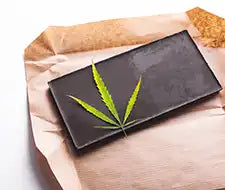
Step 1: Preparation and decarboxylation
Decarboxylation is a crucial step in making cannabis butter. This process activates the cannabinoids THC and CBD so they can develop their effect.
- Grind the cannabis: Grind the cannabis flowers with a grinder to ensure even decarboxylation. Here we recommend the products from Medusafilters to achieve the best possible result.
- Preheat the oven: Preheat the oven to 110–115 °C.
- Decarboxylate the cannabis: Spread the ground cannabis evenly on the baking tray with baking paper and bake it for 30–40 minutes. Stir the cannabis occasionally to ensure even heating.
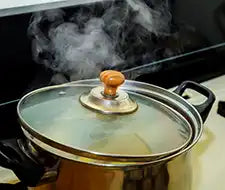
Step 2: Make the cannabis butter
- Heat the butter and water: Put the butter and water in a pot and heat the mixture over medium heat until the butter has completely melted.
- Add the cannabis: Add the decarboxylated cannabis to the butter-water mixture and stir well.
- Let it simmer: Reduce the heat to low and let the mixture simmer for 2–3 hours. Stir occasionally so the cannabinoids distribute evenly in the butter. Make sure the mixture does not boil, as otherwise the cannabinoids can be lost.
Step 3: Straining and cooling
- Strain: Pour the butter-water-cannabis mixture through a fine sieve or a cheesecloth to remove the plant material. Gently squeeze out the plant material to extract all the liquid.
- Separate and let cool: Pour the liquid into an airtight container and let it cool at room temperature. The butter will separate from the water and solidify.
- Separate the butter: Once the butter is solid, you can lift it off the surface of the water and pour away the remaining water.
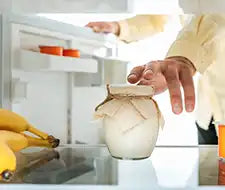
Step 4: Storing and using
Store the finished cannabutter in an airtight container in the fridge. It will keep there for about two weeks. For longer storage you can also freeze the butter.
Summary
Here once again are all the important details from this section: To make cannabis butter you need 10-20 grams of cannabis flower, 250 grams of butter, 1 litre of water, a baking tray with baking paper, a grinder, a pot, a fine sieve or cheesecloth, a spoon and an airtight container. Grind the flowers, decarboxylate them in the oven at 110-115 °C for 30-40 minutes, heat butter and water in the pot, add the cannabis and let it simmer for 2-3 hours. Strain the mixture, pour it into an airtight container and let it cool. Store the finished cannabutter in the fridge for up to two weeks or in the freezer.
Is this legal in Germany? (as of 2026)
In Germany, cannabis has been legal for adults within clear limits since the Cannabis Act (KCanG) of 1 April 2024 – unchanged as of 2026. The most important key points:
- Possession: up to 25 g out and about, up to 50 g at your place of residence.
- Home cultivation: up to 3 plants per adult, protected from access by minors.
- Consumption bans: not within sight of schools, children's and youth facilities, playgrounds and sports venues.
- Passing on & selling remain prohibited.
This is a general overview and not legal advice. These limits do not apply to accessories such as filters, papers or grinders – smoking accessories are freely available.
Frequently asked questions about cannabis butter
Now that you know how to make and use cannabis butter, let's dive into some of the most common questions to give you even more clarity.
In the fresh plant the cannabinoids are present mainly as inactive acids such as THCA. Only through controlled heating – decarboxylation – is the active THC created. If you skip this step, plant material does dissolve in the butter, but the desired effect largely fails to appear. That is why heating in the oven at a low temperature is the foundation of any successful cannabis butter.
A medium-coarse, even grind is ideal. Material ground too finely slips through the cloth when straining and brings more chlorophyll and a bitter taste into the butter. A grinder with an even result, such as the Aluminium Spike Grinder, breaks the flowers down gently and ensures even decarboxylation. This way the active compound dissolves better without the butter tasting grassy.
Active compounds absorbed through the stomach are converted in the liver, which makes the effect different from smoking: it sets in with a delay after about 30 to 120 minutes and lasts considerably longer. Because the effect comes so late, it is easy to take more too soon. So always start with a small amount and give your body enough time.
Since the Cannabis Act (KCanG) of 1 April 2024, possession for personal use is permitted for adults – as of 2026 roughly 25 g out and about, 50 g at home and up to three plants apply. If you process legally acquired or grown cannabis for your own use, that falls within this framework. Passing it on and selling it remain prohibited. This is not legal advice – check the current legal situation yourself.
Yes. The principle works with any fat-rich carrier, because the cannabinoids bind to fat. Coconut oil, ghee or olive oil are popular. Coconut oil contains especially high amounts of saturated fat and absorbs the active compounds well. You proceed just as you would with butter: first decarboxylate, then gently extract the cannabis in the oil and strain it. Oils are well suited for savoury dishes and capsules.
Too much at once can be unpleasant, but it is usually temporary. Stay calm, find a quiet, safe place and drink water or eat a small snack. The effect subsides on its own after a few hours. If you feel very unwell or are worried, do not hesitate to seek medical help. This is exactly why the rule is: better to dose carefully.
Perhaps also interesting for you?
Our Medusafilters verdict
Cannabis butter is a versatile product that can be used for both culinary and cosmetic purposes. It makes it possible to bring the benefits of cannabis into a form that is easy to dose and enjoy. If you want to make cannabis butter, it is important to carry out the decarboxylation process correctly in order to fully activate the psychoactive compounds.
Making cannabis butter requires a few basic steps, including selecting high-quality cannabis flowers, heating them to activate the cannabinoids and carefully mixing them with butter. Whether you want to use the butter to bake delicious edibles like brownies and cookies, or to use it as a base for nourishing balms – the possibilities are diverse.
Products from Medusafilters like our high-quality Spike Grinders are ideal for grinding your cannabis finely and evenly, which ensures an even distribution of the active compounds in the butter. Our metal ashtray offers a practical and stylish solution for the residue when smoking cannabis. And our activated carbon filters provide a lower-pollutant smoking experience that complements the use of cannabis butter perfectly. Have fun experimenting with and enjoying your own cannabis butter creations!